Clinic growth · Workflow guide
Clinic marketing vs automation: why a bigger ad budget won’t fix a leaking front desk
Ads, agencies, another receptionist or automation? Compare what each costs, what it fixes and how fast it works, and calculate which one your clinic needs first.
Updated
The short answer
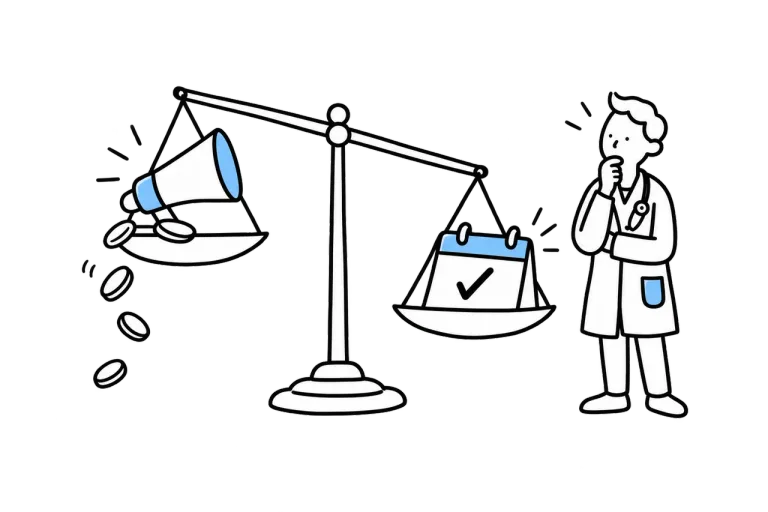
Marketing buys more enquiries. Automation makes sure the enquiries you already get turn into appointments. If your clinic misses calls, replies slowly on WhatsApp or loses booked patients to no-shows, extra ad spend pays for patients who never reach you. Fix conversion first with call answering, instant booking and reminders, then spend on marketing so every rupee works harder.
Marketing and automation solve different problems
Marketing works at the top of the funnel. Ads, agencies, SEO and social media put your clinic in front of more people. Automation works on everything after that: answering the call, replying on WhatsApp, offering a slot, confirming, reminding and bringing the patient back.
The two are not substitutes, but the order matters. Marketing multiplies whatever your front desk already does. If the front desk converts well, marketing multiplies good results. If it leaks, marketing multiplies the leak.
What clinics usually spend money on, compared
These are the five most common ways clinics try to get more patients, and what each one actually changes.
| Option | What it fixes | Cost pattern | How fast it works | Main risk |
|---|---|---|---|---|
| Google and Meta ads | More people discover the clinic | Ongoing spend per click or lead; stops when you stop paying | Days | You pay for enquiries even when they are missed |
| Marketing or SEO agency | Visibility, content and campaigns | Monthly retainer, usually plus ad budget | Months | Hard to connect to booked appointments |
| Another receptionist | Calls during their shift | Salary, training and leave cover | Weeks to hire and train | Still limited to working hours and one call at a time |
| Outsourced call centre | Overflow calls | Per-minute or per-seat fees | Weeks | Agents rarely see your live schedule |
| Reception and booking automation | Missed calls, slow replies, no-shows and recalls | Software subscription | Days to weeks | Needs a clean schedule and clear handoff rules |
A worked example: where the money actually goes
The numbers below are an illustration, not a benchmark. Replace them with your own.
A clinic spends ₹60,000 a month on ads and receives 300 enquiries, so each enquiry costs ₹200. A quarter of calls are missed and never returned, so 75 enquiries (₹15,000 of ad spend) are lost before anyone speaks to the patient. Half of the remaining 225 book, giving about 112 appointments. With 15% no-shows, about 95 patients actually arrive. The real cost is roughly ₹630 per visit.
Now the clinic answers every enquiry and sends reminders. The same 300 enquiries, at the same 50% booking rate, give 150 appointments. If reminders bring no-shows down to 8%, about 138 patients arrive. The cost per visit falls to roughly ₹435, and the clinic sees around 43 more patients a month without spending a rupee more on ads.
Work out the numbers for your clinic
You need four figures from the last month: marketing spend, total enquiries (calls, WhatsApp and web), enquiries that never got a reply, and appointments that were kept.
- Cost per enquiry = monthly marketing spend ÷ total enquiries
- Wasted spend = unanswered enquiries × cost per enquiry
- Lost visits = unanswered enquiries × your booking rate
- Cost per visit = monthly marketing spend ÷ appointments actually kept
Paid attention stops when you stop paying
Ads rent attention. The day the budget ends, the enquiries they produced stop too, and in competitive areas you are bidding against every nearby clinic for the same searches.
Automation works on every enquiry, including the ones that cost you nothing: patients who find your Google Business Profile, referrals from other patients and people coming back for a follow-up. Improving conversion makes your free channels and your paid channels more productive at the same time.
When marketing is the right next step
Marketing is the right investment when the front desk is no longer the bottleneck. Check these before increasing a budget.
- Every call is answered or returned the same day
- WhatsApp enquiries get a reply with available slots within minutes
- Patients can book from your Google profile and website
- No-shows are tracked and reminders are running
- Your calendar still has empty slots you want to fill
What to automate first
Start with the steps closest to the money.
- Answer or call back every missed call, including after hours
- Reply to WhatsApp enquiries instantly with real available slots
- Send confirmations and reminders, with one-reply rescheduling
- Send recall messages to patients who are due for a follow-up
- Ask every patient for a Google review after the visit
Where Paperwhale fits
Paperwhale connects calls, WhatsApp, appointments and your Google Business Profile in one workspace, so enquiries from every channel get a clear next step and the team can see what was missed. Plans are quoted for each location, so you can compare the cost directly with your current ad budget or staffing.
Frequently asked questions
Is automation cheaper than marketing for clinics?
They pay for different things. Marketing is an ongoing cost per enquiry. Automation is a fixed subscription that improves how many enquiries become visits. For clinics that miss calls or have high no-shows, fixing conversion usually produces more visits per rupee than adding ad spend.
How much should a clinic spend on marketing?
There is no single right figure. Calculate your cost per kept appointment and compare it with the value of a first visit and its follow-ups. Increase spend only when conversion is healthy and the calendar has room.
Can automation replace marketing completely?
Not for a new clinic that nobody knows about yet. Automation cannot create awareness. It makes sure the awareness you have, from Google, referrals and returning patients, is not wasted.
What is the cheapest way to get more patients?
Convert the enquiries you already receive. Answer missed calls, reply quickly on WhatsApp, offer instant booking, send reminders and recall patients who are due. Then complete your Google Business Profile and ask every patient for a review.